

Please Leave Us A Message
Privacy statement: Your privacy is very important to Us. Our company promises not to disclose your personal information to any external company with out your explicit permission.



Heavy duty forgings are the backbone of critical industrial machinery, providing the structural integrity required for high-load applications. Unlike cast or welded components, forged metals such as steel, stainless steel, and titanium offer superior grain structure and mechanical properties, ensuring they can withstand extreme pressures and temperatures.
At Jiangyin Liaoyuan New Energy Co., Ltd., we specialize in manufacturing these essential components. From wind turbine drivetrains to heavy equipment gearboxes, our precision machined parts are designed to extend the lifespan of your operations and reduce maintenance risks.
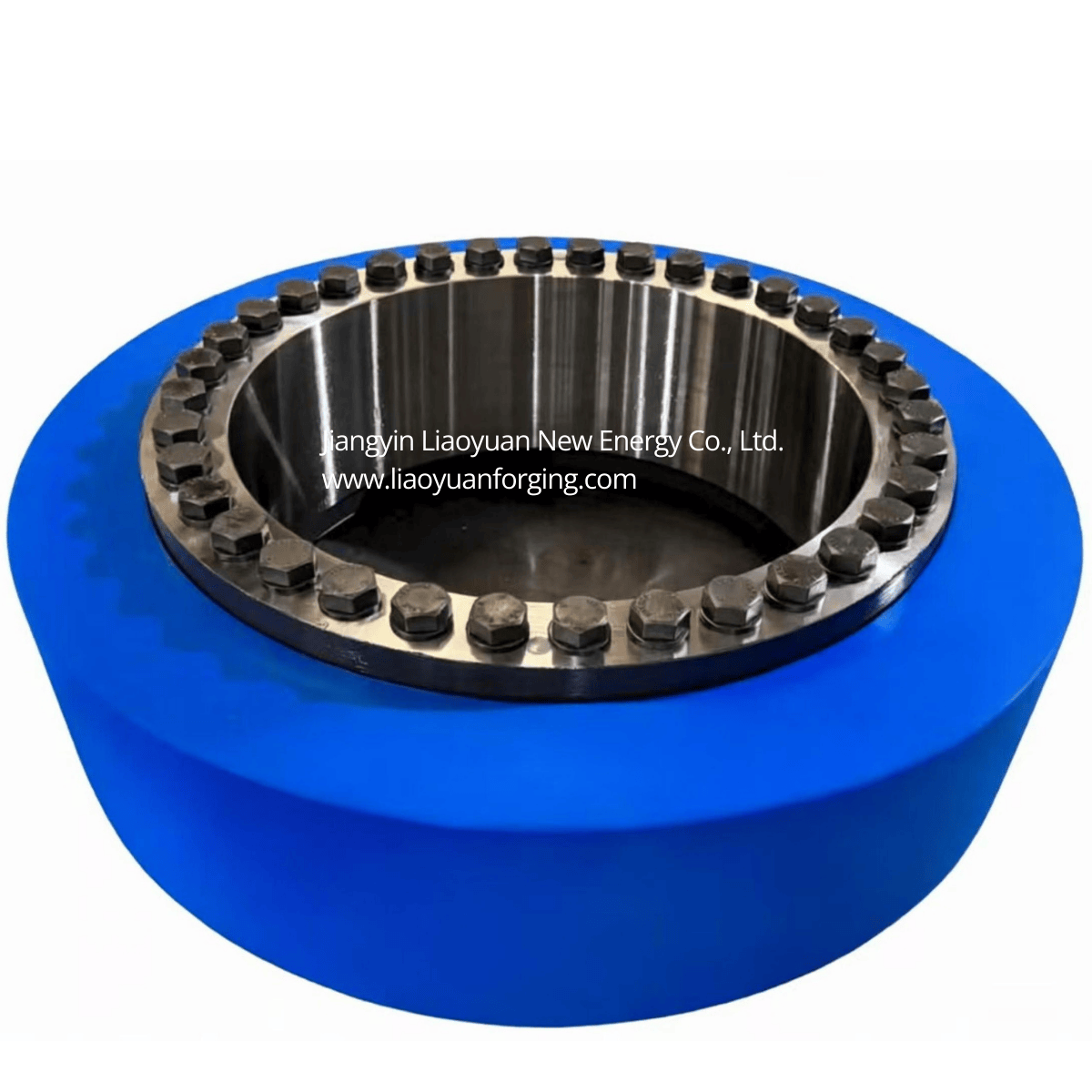
Liaoyuan operates a 60,000 m² facility equipped with over 300 production machines. We provide a complete turnkey solution covering open-die forging, ring rolling, heat treatment, CNC machining, and in-house inspection.
With an annual capacity of 120,000 tons, we support global OEMs with large-scale orders. Our capabilities include producing open-die forged shafts up to 10 tons and 8 meters long, as well as seamless rolled rings up to 5 meters in diameter.
Selecting a reliable supplier for heavy duty forgings is critical to minimizing downtime and ensuring operational safety. When evaluating potential partners, focus on their ability to handle complex geometries and meet international quality standards.
Ensure the manufacturer has the infrastructure for large-scale projects. Look for facilities capable of handling heavy weights (e.g., 10+ tons) and large diameters without compromising structural integrity.
Advanced testing is non-negotiable. A qualified partner should utilize CMM measurement and ultrasonic testing to guarantee that every component meets precise specifications.
A supplier offering integrated services—from raw forging to final CNC machining—reduces your supply chain complexity and ensures tighter tolerances across the entire component lifecycle.
Choose a partner with a proven track record in your specific sector, whether it's wind power, energy generation, or heavy transport equipment.
Use this checklist to validate your supplier's capabilities before finalizing your procurement contract. Ensuring these criteria are met will protect your project from delays and quality issues.
To ensure the longevity of your heavy-duty machinery, sourcing from manufacturers with specialized expertise in metallurgy and precision engineering is vital. Here are key recommendations for selecting the best partner:
Seek suppliers who manage the entire process in-house. This eliminates coordination gaps between separate foundries and machine shops, resulting in faster turnaround times and higher consistency.
Do not compromise on quality control. The best suppliers use advanced CMM measurement and ultrasonic testing to catch defects early, saving you costly replacements down the line.
Partner with companies that have decades of experience in demanding industries like wind power or power transmission. Their accumulated knowledge is invaluable for solving complex engineering challenges.
While global sourcing is common, choosing a supplier with efficient logistics channels (like proximity to major ports) can significantly reduce shipping costs and transit times.
Procurement teams often face specific hurdles when sourcing heavy duty forgings globally. Understanding these common pitfalls allows you to mitigate risks proactively.
Without strict oversight, variations in material composition can lead to premature failure. Always insist on standardized chemical analysis and mechanical property testing for every batch.
Complex forging processes can delay production. Work with suppliers who have ample capacity and clear production scheduling to avoid bottlenecks in your assembly line.
Heavy components incur significant freight charges. Plan packaging and shipping methods carefully to optimize container space and minimize landed costs.
Forged components have a continuous grain structure that follows the shape of the part, making them much stronger and more fatigue-resistant than cast parts, which have a random grain structure. For heavy-duty applications, forging is the preferred method.
Standard CNC machining can typically achieve tolerances in the range of IT6 to IT8. For highly critical interfaces, tighter tolerances can be specified depending on the machining capabilities of the supplier.
Yes, specialized ring rolling technology allows for the production of seamless rings with diameters up to 5 meters or more, tailored to specific application requirements.
We utilize advanced ultrasonic testing (UT) to detect internal flaws and Coordinate Measuring Machine (CMM) for dimensional accuracy. Every step is documented to ensure full traceability.
Privacy statement: Your privacy is very important to Us. Our company promises not to disclose your personal information to any external company with out your explicit permission.
Fill in more information so that we can get in touch with you faster
Privacy statement: Your privacy is very important to Us. Our company promises not to disclose your personal information to any external company with out your explicit permission.