


Please Leave Us A Message
Privacy statement: Your privacy is very important to Us. Our company promises not to disclose your personal information to any external company with out your explicit permission.

High-strength locking assemblies, often referred to as shrink discs or locking devices, are mechanical components designed to create a frictional connection between two mating parts, typically a shaft and a hub. Unlike traditional methods that rely on keys, splines, or set screws, these assemblies use high-pressure clamping force to transmit torque and axial loads securely.
For heavy industrial applications like wind power drivetrains and gearbox systems, high-strength locking assemblies offer a backlash-free, maintenance-friendly solution. They simplify assembly processes, reduce stress concentrations on the shaft, and allow for easy disassembly without damaging expensive components. This makes them an essential component in modern precision machinery where reliability is paramount.
At Jiangyin Liaoyuan New Energy Co., Ltd., quality is not just a checkpoint; it is integrated into every stage of production. Our facility, equipped with over 300 production machines and an annual forging capacity of 120,000 tons, ensures that we can meet large-scale demands without compromising on precision.
We specialize in manufacturing critical components for high-strength locking assemblies and related drivetrain systems. Our process includes open-die forging, ring rolling, advanced heat treatment, and CNC machining. Every batch undergoes rigorous inspection using CMM (Coordinate Measuring Machine) measurement and ultrasonic testing to ensure compliance with international standards.
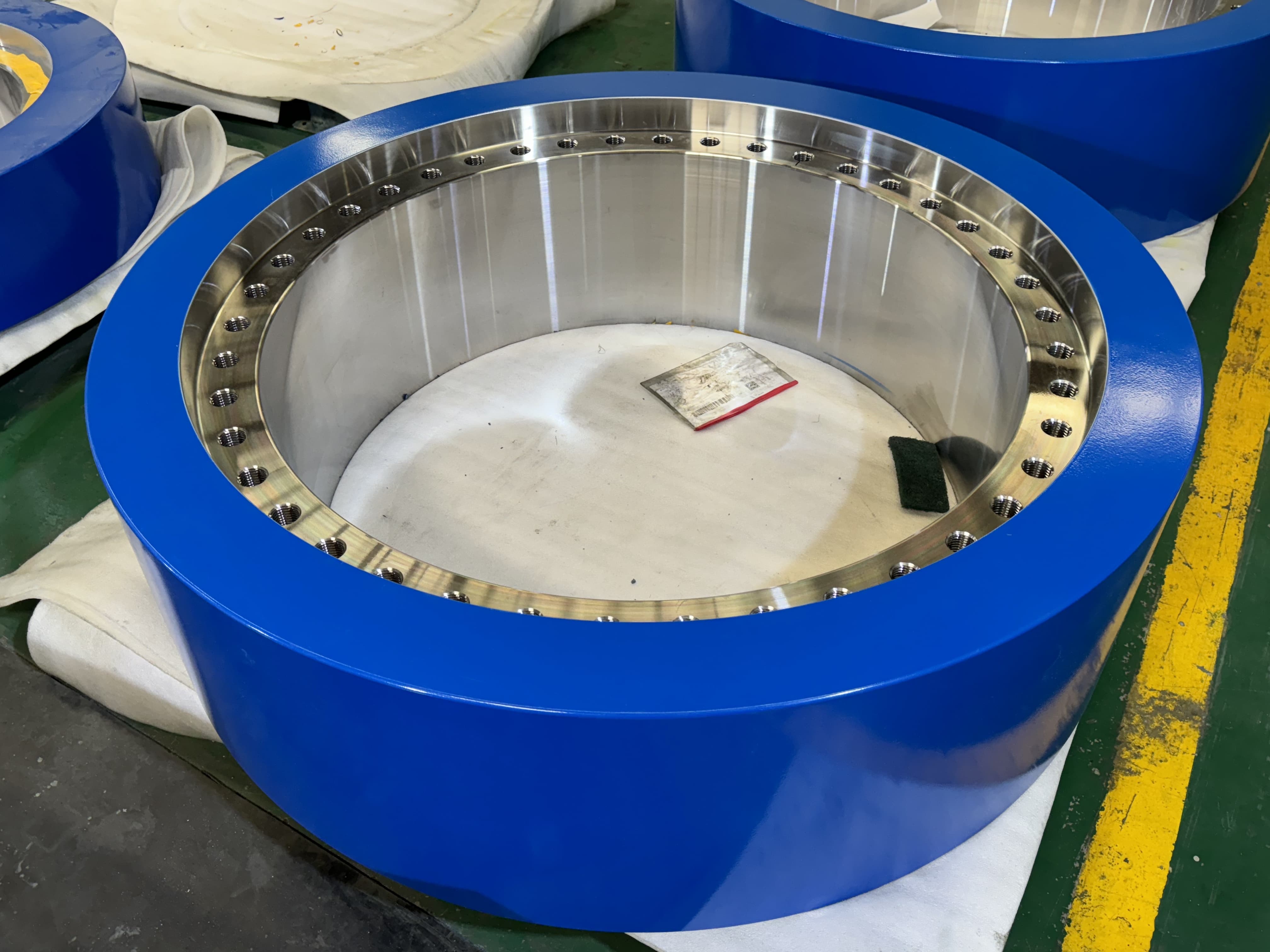
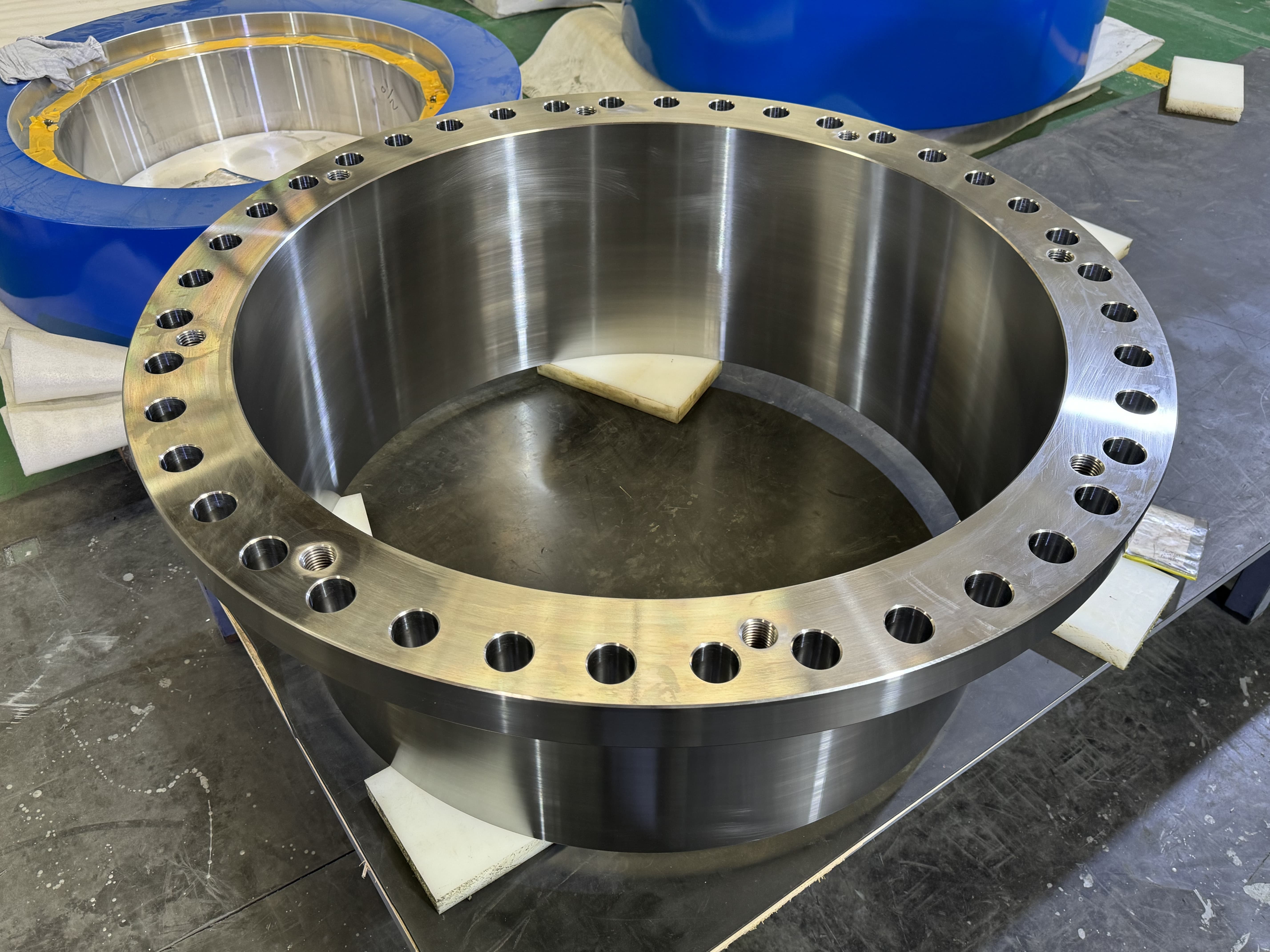
Selecting the right locking device for heavy industry requires more than just looking at dimensions. Buyers must consider the material integrity, surface hardness, and the precision of the machining tolerances. A poorly manufactured locking disc can lead to slippage under high torque, causing catastrophic failure in wind turbines or gearboxes.
Why Liaoyuan? With our integrated manufacturing model, we control the quality of the raw forged blanks through to the final machined part. This vertical integration reduces lead times and guarantees that every high-strength locking assembly meets your exact specifications.
Before finalizing your procurement order for high-strength locking assemblies, use this checklist to evaluate potential suppliers and mitigate supply chain risks.
Procuring high-strength locking assemblies internationally can present challenges. Here are common issues buyers face and how to address them effectively.
Slippage usually occurs due to insufficient clamping force, incorrect installation torque, or poor surface finish on the mating parts. To prevent this, ensure your supplier uses high-grade alloy steels and provides precise installation guidelines. Regularly check bolt tension during maintenance cycles.
Look for manufacturers with integrated capabilities (forging + machining) rather than trading companies. Request sample reports including ultrasonic testing and CMM measurements. Visiting the factory or hiring a third-party inspector can also verify their actual production capacity and quality control processes.
Standard sizes may have shorter lead times if held in stock. However, for custom high-strength locking assemblies requiring specific forging and machining, lead times typically range from 4 to 8 weeks depending on volume and complexity. Early engagement with the manufacturer allows for better planning and potential inventory buffering.
Yes, but standard carbon steel versions may require protective coatings. For highly corrosive environments like offshore wind farms, specify stainless steel variants or specialized surface treatments such as zinc-nickel plating or hot-dip galvanizing to extend service life.
High-strength locking assemblies are versatile components used across various heavy industries where reliable power transmission is critical. Their ability to handle both radial and axial loads makes them ideal for demanding applications.
Used in wind turbine hubs, pitch mechanisms, and main shaft connections. The backlash-free nature of locking devices ensures smooth operation and reduces wear in critical drivetrain components.
Essential for mounting gears, pulleys, and sprockets onto shafts in mining, cement, and steel industries. They simplify maintenance by allowing quick removal and replacement of components without heating or pressing.
Applied in construction equipment, marine propulsion, and paper mills. Their robust design handles shock loads and vibrations better than traditional keyway connections, extending the lifespan of machinery.
When sourcing high-strength locking assemblies, choosing the right partner is crucial for long-term success. We recommend evaluating suppliers based on the following criteria to ensure quality, reliability, and cost-effectiveness.
Prioritize suppliers who control the entire production chain from raw material forging to final CNC machining. This integration ensures consistent quality, faster turnaround times, and better cost control. Suppliers like Jiangyin Liaoyuan New Energy Co., Ltd. offer end-to-end solutions with over 25 years of experience in heavy industrial components.
Look for suppliers with dedicated engineering teams who can assist with technical queries, custom designs, and troubleshooting. A supplier with strong R&D capabilities will provide better support during the product development phase.
Ensure the supplier has experience in exporting and can handle complex logistics. Proximity to major ports (like Shanghai, ~140km from Liaoyuan) facilitates efficient shipping to global destinations. Clear communication and English-speaking staff streamline the procurement process.
Get answers to the most common questions about high-strength locking assemblies, their installation, and maintenance.
Unlike keyways, which create stress concentrations and can loosen over time, locking assemblies distribute load evenly around the shaft. This results in higher torque capacity, zero backlash, and easier assembly/disassembly without special tools.
Generally, yes. Locking assemblies are designed for multiple assembly cycles. However, it is recommended to inspect the contact surfaces for damage or deformation before reinstallation. Always replace bolts if they show signs of stretching or wear.
Torque values depend on the specific model, shaft diameter, and desired clamping force. Manufacturers provide detailed torque tables in their catalogs. It is critical to use a calibrated torque wrench and follow the specified tightening sequence to ensure even pressure distribution.
Most high-strength locking assemblies are made from high-carbon chromium bearing steel or alloy steels like 40CrNiMoA. These materials offer excellent hardness, toughness, and fatigue resistance, essential for heavy-duty industrial applications.
Privacy statement: Your privacy is very important to Us. Our company promises not to disclose your personal information to any external company with out your explicit permission.
Fill in more information so that we can get in touch with you faster
Privacy statement: Your privacy is very important to Us. Our company promises not to disclose your personal information to any external company with out your explicit permission.