

Please Leave Us A Message
Privacy statement: Your privacy is very important to Us. Our company promises not to disclose your personal information to any external company with out your explicit permission.



Ring-rolled forgings are a specialized manufacturing process where a pre-formed metal ring is expanded into larger diameters using high-pressure rolling mills. This method creates seamless, continuous grain structures that offer superior mechanical properties compared to cast or welded alternatives.
For heavy industrial applications—such as wind turbine drivetrains, power transmission systems, and large-scale gearboxes—ring-rolled forgings provide the structural integrity required to withstand extreme loads and rotational forces. The process ensures uniform material density and eliminates internal voids, reducing the risk of catastrophic failure in critical machinery.
Jiangyin Liaoyuan New Energy Co., Ltd. has mastered this technology since 1997, utilizing advanced ring rolling capabilities to produce components up to 5 meters in diameter. By integrating open-die forging with precision CNC machining, we deliver near-net shapes that minimize material waste and accelerate your time-to-market.
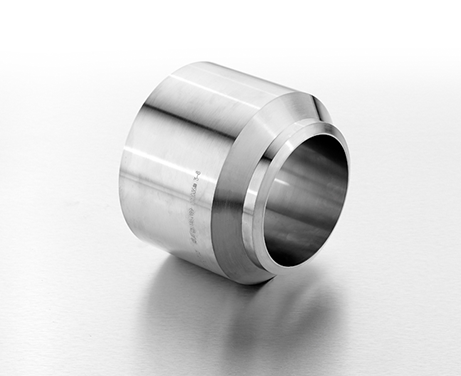
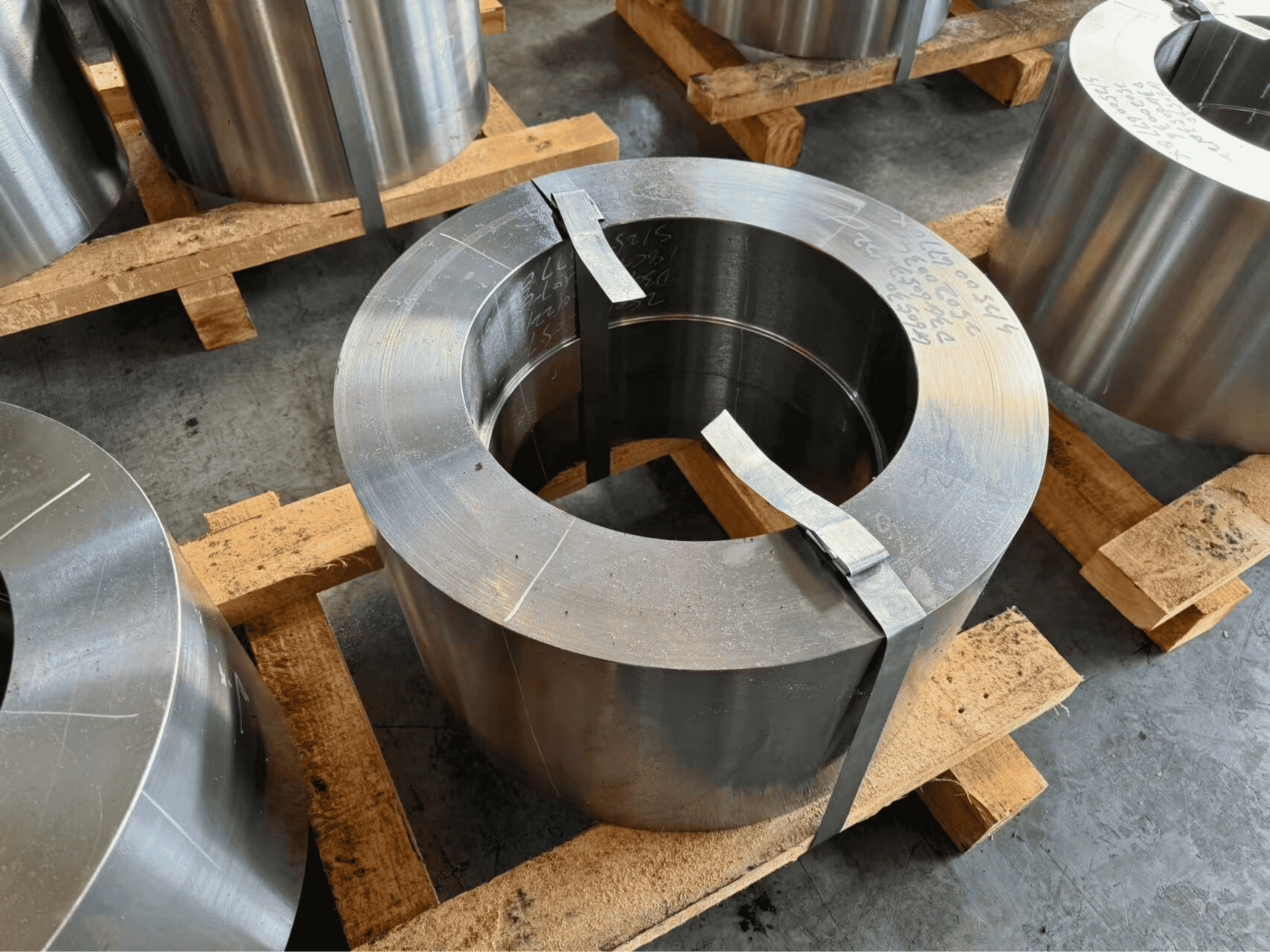
Our 60,000 m² facility in Jiangsu Province supports an annual forging capacity of 120,000 tons, backed by over 300 production machines. This scale allows us to handle massive orders while maintaining strict quality control at every stage—from raw material intake to final delivery.
We manage the entire lifecycle: open-die forging, ring rolling, heat treatment, CNC machining, and inspection. This vertical integration reduces lead times and ensures consistent quality across all ring-rolled forgings.
Every component undergoes advanced ultrasonic testing and CMM measurement. Our 380-strong team, including dedicated quality specialists, ensures compliance with international standards for wind power and heavy equipment industries.
Verify if the supplier can handle your volume requirements. Look for manufacturers with documented annual tonnage (e.g., 100k+ tons) and a diverse machine fleet to ensure on-time delivery for large orders.
Choose suppliers who offer more than just rolling. Integrated capabilities—including heat treatment and CNC machining—reduce supply chain complexity and improve part accuracy.
Ensure the manufacturer uses advanced testing methods like Ultrasonic Testing (UT) and CMM. Certified processes mitigate risks associated with high-load industrial applications.
When sourcing ring-rolled forgings for wind power, gearbox, or heavy machinery applications, use this checklist to evaluate potential suppliers and secure the best value.
Does the supplier provide full material certification and traceability from raw ingot to finished ring? Critical for audit compliance.
Can they hold tight tolerances on inner/outer diameters and cross-sections? Check their CNC machining precision capabilities.
Do they possess in-house UT and CMM facilities? Outsourcing testing adds lead time and cost.
Is the facility located near major ports (e.g., Shanghai)? Proximity reduces shipping costs and transit time for heavy components.
Based on industry reputation, manufacturing scale, and technical expertise, these suppliers stand out as top choices for global procurement teams.
A leading Chinese manufacturer established in 1997, specializing in large forged shafts and rolled rings. With a 60,000 m² facility and 120,000-ton annual capacity, they offer integrated solutions from open-die forging to CNC machining. Ideal for wind power and heavy equipment OEMs requiring large-diameter rings (up to 5m) and robust quality control.
Look for suppliers certified to ISO 9001 and specific industry standards (e.g., GL, DNV for wind). Prioritize those with visible investments in modern ring rolling mills and automated machining centers to ensure consistency.
Main bearing rings and gear rings for wind turbines require seamless construction to handle variable loads and environmental stress.
Planetary gear rings and carrier components for mining and steel industry gearboxes demand high fatigue strength and precise tooth geometry.
Thermal and hydroelectric power plants rely on forged rings for turbine shafts, generator couplings, and heavy-duty valve components.
Ring-rolled forgings offer superior mechanical properties due to the refined grain structure created during the rolling process. Unlike cast parts, which can have porosity or inconsistent density, forged rings are dense and homogeneous. This results in better fatigue life, higher impact resistance, and greater reliability under high-stress conditions, making them ideal for critical applications like wind turbine main bearings.
Advanced ring rolling technology can produce seamless rings with outer diameters exceeding 5 meters. The exact size depends on the equipment used, but major manufacturers like Jiangyin Liaoyuan specialize in large-diameter rings suitable for heavy industrial machinery and power generation equipment.
Common materials include carbon steels, alloy steels, stainless steels, and nickel-based superalloys. The choice depends on the application's requirements for strength, corrosion resistance, and temperature tolerance. For example, wind power applications often use high-strength low-alloy (HSLA) steels for their durability.
The process starts with a pre-formed ring blank that closely matches the final shape of the component. This "near-net shape" approach minimizes the amount of material removed during subsequent CNC machining. Compared to starting with a solid billet, ring rolling significantly reduces scrap rates and lowers the overall landed cost per part.
Privacy statement: Your privacy is very important to Us. Our company promises not to disclose your personal information to any external company with out your explicit permission.
Fill in more information so that we can get in touch with you faster
Privacy statement: Your privacy is very important to Us. Our company promises not to disclose your personal information to any external company with out your explicit permission.