

Please Leave Us A Message
Privacy statement: Your privacy is very important to Us. Our company promises not to disclose your personal information to any external company with out your explicit permission.



Transmission components are the critical mechanical elements that transfer power and torque between different parts of a machine. In heavy industrial applications, these include forged shafts, gearbox components, bearing rings, and coupling hubs. They serve as the backbone of drivetrain systems in wind turbines, industrial machinery, and power generation equipment.
For procurement buyers, understanding transmission component specifications is essential for ensuring system reliability and minimizing downtime. These components must withstand extreme loads, continuous rotation, and harsh operating conditions while maintaining precise tolerances throughout their service life.
Jiangyin Liaoyuan New Energy Co., Ltd. operates a 60,000 m² manufacturing facility with an annual forging capacity of 120,000 tons. Our integrated production process covers open-die forging, ring rolling, heat treatment, CNC machining, and comprehensive inspection—ensuring consistent quality from raw material to finished component.
Buyer benefit: This scale ensures on-time delivery even for large orders, reducing your supply chain risk and supporting just-in-time manufacturing requirements.
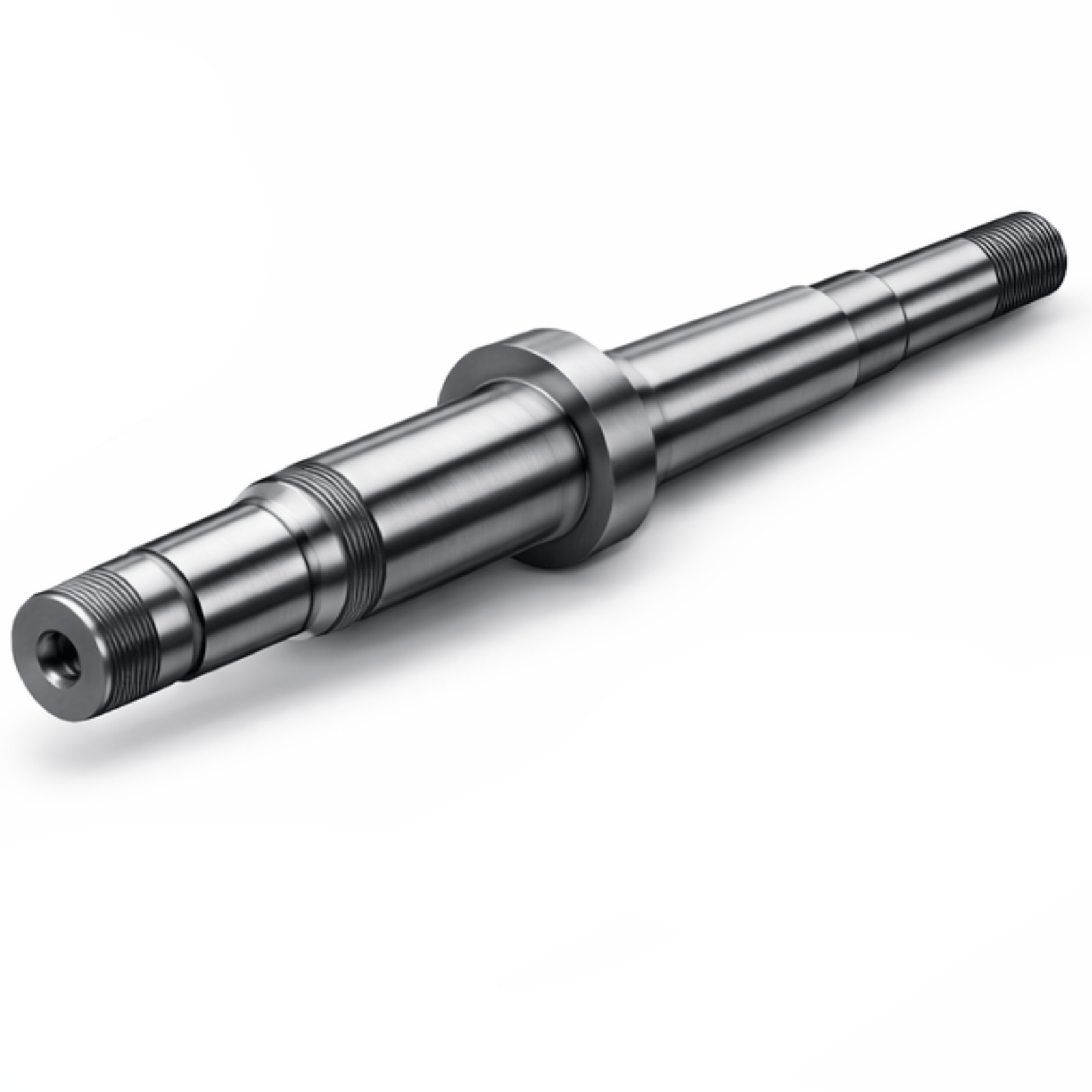

When sourcing transmission components, evaluate suppliers based on their manufacturing capabilities, quality control systems, and industry experience. Key factors include forging capacity, precision machining expertise, and testing infrastructure such as CMM measurement and ultrasonic inspection.
Use this checklist when evaluating potential suppliers for your transmission component procurement needs. Each criterion helps mitigate risk and ensures you select a partner capable of meeting your technical and commercial requirements.
Procurement professionals face recurring challenges when sourcing transmission components. Understanding these common issues and how experienced manufacturers address them can significantly reduce your procurement risk.
The Problem: Forged components vary between production runs, leading to assembly issues and unexpected failures.
Solution: Integrated manufacturing with strict process control and advanced inspection (CMM + ultrasonic testing) ensures batch-to-batch consistency across all transmission components.
The Problem: Fragmented supply chains with separate forging, machining, and finishing operations create bottlenecks.
Solution: A single facility handling forging through final machining with 120,000-ton annual capacity eliminates coordination delays and supports reliable delivery schedules.
The Problem: Standard catalog products don't match specific application requirements, forcing design compromises.
Solution: Flexible manufacturing delivers near-net forged blanks, rough-machined components, or fully assembled-ready parts tailored to your exact specifications.
The Problem: Missing test reports and material certifications complicate compliance and audit processes.
Solution: Comprehensive inspection documentation including CMM measurement results and ultrasonic test reports provided for every component shipment.
Transmission components manufactured by Liaoyuan serve diverse heavy industrial sectors where reliability under extreme conditions is non-negotiable. Each application demands specific material properties, dimensional tolerances, and performance characteristics.
Forged shafts and gearbox components for wind turbine drivetrains, designed to withstand variable loads and continuous operation in remote locations. Reduces maintenance costs and extends service intervals.
Planetary gearbox components and coupling hubs for heavy-duty industrial machinery. Precision-machined to ensure smooth power transmission and minimal vibration during high-load operations.
Bearing rings and forged discs for power generation equipment requiring exceptional fatigue resistance. Critical for maintaining uptime in energy infrastructure projects worldwide.
Rolled rings and transmission shafts for construction and mining machinery operating in harsh environments. Designed for maximum durability under shock loads and abrasive conditions.
Custom forged components for marine gearboxes and propulsion systems. Corrosion-resistant materials and tight tolerances ensure reliable performance in saltwater environments.
High-strength forged shafts and shrink discs for rolling mills and conveyor systems. Built to handle extreme torque transmission in continuous-operation industrial settings.
When selecting a manufacturing partner for transmission components, consider suppliers who demonstrate integrated capabilities, proven quality systems, and extensive industry experience. The following recommendations help streamline your sourcing process.
Prioritize suppliers offering end-to-end manufacturing—from forging through machining and inspection. This approach reduces supply chain complexity, improves quality control, and simplifies communication. Look for facilities with substantial annual capacity (100,000+ tons) and comprehensive equipment portfolios.
Ensure potential suppliers have in-house CMM measurement and ultrasonic testing capabilities. These advanced inspection methods provide objective verification of component integrity and dimensional accuracy, giving you confidence in every shipment received.
Consider proximity to major shipping ports when evaluating suppliers. Facilities located within 150 km of port infrastructure offer faster export processing and lower logistics costs, directly impacting your landed cost per unit.
Choose manufacturers with demonstrated experience serving global OEMs in target industries. Proven success in wind power, power generation, and heavy equipment sectors indicates the supplier understands your specific technical requirements and quality expectations.
Get answers to common questions about transmission component sourcing, manufacturing capabilities, and quality assurance from experienced industrial suppliers.
Manufacturers typically produce forged shafts, rolled rings, gearbox components, bearing rings, shrink discs, and coupling hubs. These components form the core of drivetrain systems in wind turbines, industrial gearboxes, power generation equipment, and heavy machinery.
Integrated manufacturing consolidates forging, ring rolling, heat treatment, CNC machining, and inspection under one roof. This eliminates handoff errors between separate facilities, ensures consistent material properties throughout the process, and enables real-time quality adjustments. The result is tighter tolerances and more reliable components.
Key inspection methods include Coordinate Measuring Machine (CMM) for dimensional accuracy and ultrasonic testing for internal defect detection. These non-destructive testing methods identify subsurface flaws without damaging the component, ensuring every part meets specified quality standards before shipment.
Yes. Advanced forging facilities can produce open-die forged shafts up to 10 tons and 8 meters in length, plus seamless rolled rings up to 5 meters in diameter. Components can be delivered as near-net forged blanks, rough-machined parts, or fully machined assemblies ready for integration into your equipment.
Critical industries include wind power generation, industrial machinery, power plants, marine propulsion, steel production, and mining equipment. These sectors demand components that withstand extreme loads, continuous operation, and harsh environmental conditions while maintaining precise performance specifications.
Facilities located near major ports—such as those within 140 km of Shanghai—offer faster export processing, reduced inland transportation costs, and simpler logistics coordination. This geographic advantage translates to lower landed costs and more predictable delivery timelines for international buyers.
Privacy statement: Your privacy is very important to Us. Our company promises not to disclose your personal information to any external company with out your explicit permission.
Fill in more information so that we can get in touch with you faster
Privacy statement: Your privacy is very important to Us. Our company promises not to disclose your personal information to any external company with out your explicit permission.