

Please Leave Us A Message
Privacy statement: Your privacy is very important to Us. Our company promises not to disclose your personal information to any external company with out your explicit permission.



Torque transmission components are the critical mechanical elements responsible for transferring rotational power from a source to a driven load. In heavy industrial applications, these components—including forged shafts, gearboxes, and coupling hubs—must withstand extreme loads while maintaining precision. For global procurement teams, selecting high-quality torque transmission components is essential to ensure equipment reliability, minimize downtime, and optimize total cost of ownership.
Jiangyin Liaoyuan New Energy Co., Ltd. operates an integrated manufacturing facility with an annual forging capacity of 120,000 tons. Our comprehensive process covers open-die forging, ring rolling, heat treatment, CNC machining, and in-house inspection—all under one roof.
For procurement buyers, this vertical integration means reduced lead times, consistent quality control, and the ability to scale production rapidly for large orders. We support both near-net forged blanks and fully machined components ready for assembly.
Every torque transmission component undergoes rigorous quality assurance using CMM measurement systems and advanced ultrasonic testing. This ensures compliance with international standards and gives your engineering team confidence in component performance under high-load conditions.
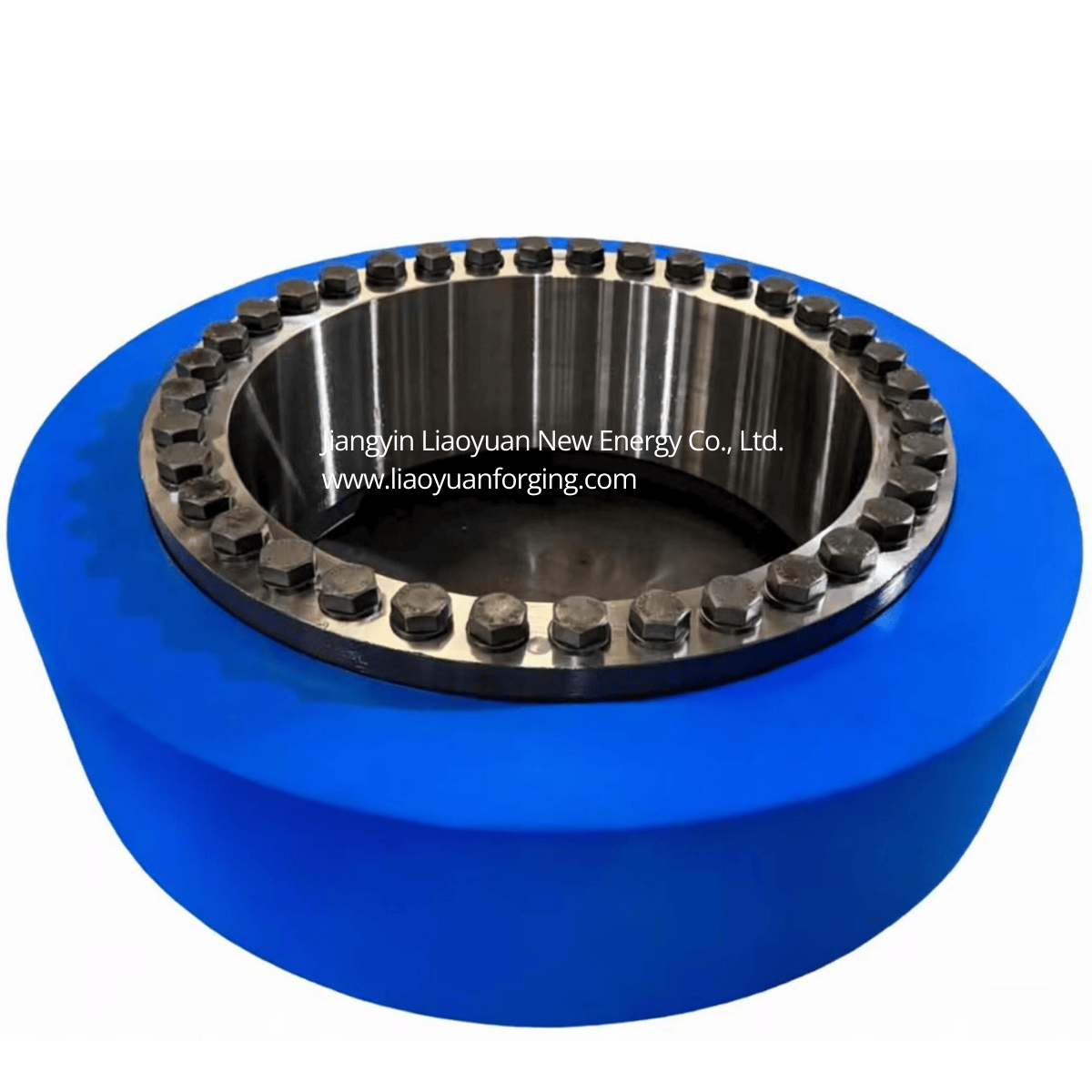
Our forged components serve as the backbone of heavy-duty machinery across multiple industries. Understanding application-specific requirements helps procurement teams specify the right materials, tolerances, and heat treatments for their unique operational environments.
Selecting the right supplier for torque transmission components requires evaluating more than just price. Procurement teams must assess manufacturing capabilities, quality systems, lead times, and technical support to mitigate supply chain risk.
Prioritize suppliers with integrated facilities that handle forging, heat treatment, and machining in-house. A facility like Jiangyin Liaoyuan's 60,000 m² plant with 120,000 tons annual capacity ensures you can scale orders without compromising quality or delivery timelines.
Verify that your supplier employs CMM measurement and ultrasonic testing for every batch. These inspection methods detect internal defects in forged components that visual inspection alone cannot identify, protecting your downstream assembly operations.
Look for OEM partners who can produce custom specifications—from near-net blanks to fully machined assemblies. Suppliers offering flexible machining options reduce your secondary processing costs and accelerate time-to-market.
Choose manufacturers with proven export experience and proximity to major shipping ports. Located 140 km from Shanghai Port, Liaoyuan supports efficient logistics for global distribution across wind power, energy, and heavy equipment sectors.
Use this checklist to evaluate potential suppliers and ensure your procurement decisions align with operational requirements. Each criterion addresses common pain points in heavy industrial sourcing.
Ensures scalability for large-volume orders without production bottlenecks.
Guarantees internal defect detection and material integrity verification.
Forging through final machining under one roof reduces coordination risk and lead times.
Ability to deliver near-net blanks or finished parts based on your assembly strategy.
Experience serving wind power, gearbox, and heavy equipment OEMs demonstrates reliability.
Dedicated quality specialists and engineers provide technical support throughout the procurement cycle.
Procurement challenges in the torque transmission sector often stem from inconsistent quality, inadequate inspection, and fragmented supply chains. Addressing these issues proactively protects your production schedule and end-product performance.
Without proper ultrasonic testing, internal cracks or inclusions in forged shafts may go undetected until they cause catastrophic failure in the field.
Inconsistent CNC machining tolerances can cause assembly fit issues, leading to production delays and increased scrap rates at your facility.
Improper heat treatment leads to variable hardness and reduced fatigue life, causing premature component failure in high-cycle applications.
Sourcing forged blanks, heat treatment, and machining from separate vendors increases coordination complexity and extends lead times significantly.
Based on industry best practices and buyer requirements, here is the ideal supplier profile for procuring high-performance torque transmission components. Jiangyin Liaoyuan New Energy Co., Ltd. exemplifies this model.
Founded in 1997 with over 25 years of expertise in large-scale forging and precision machining for heavy industrial applications.
120,000 tons annual forging capacity across 60,000 m² of facility space with 300+ production machines supporting global demand.
End-to-end manufacturing from open-die forging through CNC machining and inspection eliminates external dependency risks.
Serving wind power, gearbox, and heavy equipment manufacturers worldwide with reliable delivery and competitive pricing.
Answers to common procurement questions about torque transmission components, manufacturing capabilities, quality standards, and ordering processes.
Forged torque transmission shafts are primarily used in wind turbine drivetrains, industrial gearboxes, power generation equipment, and heavy construction machinery. These components transmit high rotational loads while maintaining precise alignment and minimizing vibration.
We produce open-die forged shafts up to 10 tons in weight and 8 meters in length. Our seamless rolled rings can reach diameters up to 5 meters. These dimensions cover the majority of heavy industrial torque transmission requirements.
Yes. We provide full customization from near-net forged blanks to fully machined components ready for assembly. Our CNC machining capabilities allow us to meet specific dimensional tolerances and surface finish requirements for your application.
Every component undergoes CMM (Coordinate Measuring Machine) dimensional verification and advanced ultrasonic testing to detect internal defects. These methods ensure compliance with international quality standards and provide documentation for your quality records.
Lead times vary based on specification complexity and order volume. With our 120,000-ton annual capacity and integrated production lines, we maintain competitive delivery schedules. Contact our sales team for project-specific timeline estimates.
Yes. Shrink discs (locking devices) are among our core products. These components provide secure, backlash-free connections between shafts and hubs, widely used in conveyor systems, mixers, and rotating machinery applications.
Privacy statement: Your privacy is very important to Us. Our company promises not to disclose your personal information to any external company with out your explicit permission.
Fill in more information so that we can get in touch with you faster
Privacy statement: Your privacy is very important to Us. Our company promises not to disclose your personal information to any external company with out your explicit permission.